What this investigation is
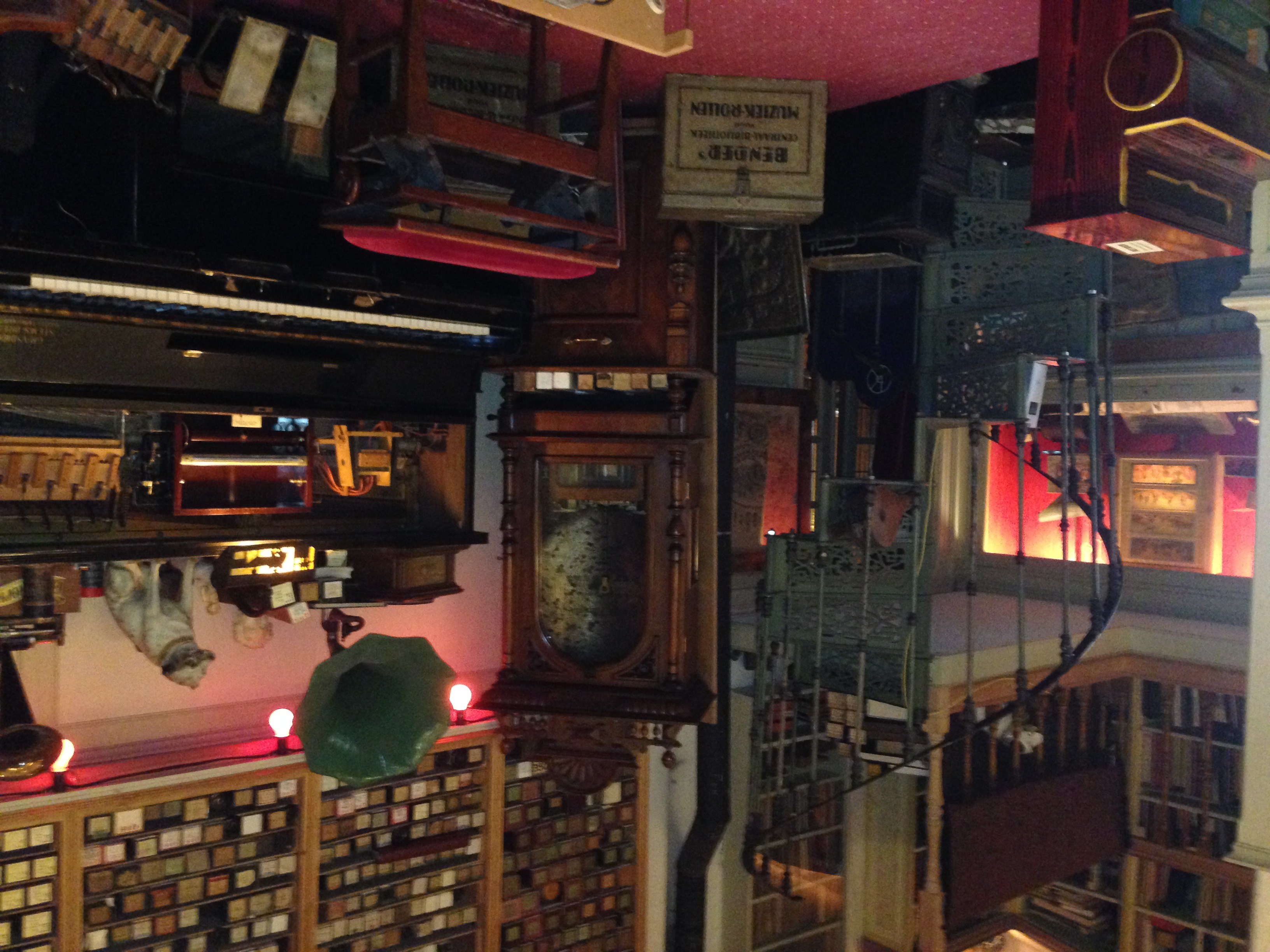
The Pianola Museum at Westerstraat 106 preserves player pianos, reproduction pianos and the paper-roll media made for them. The technology is not simply a piano that appears to play itself: a roll carries encoded musical information, while pneumatic and mechanical systems translate it into movement at the keyboard.
What the sources establish
- The museum is at Westerstraat 106 in Amsterdam’s Jordaan district.
- Its public description lists pianolas, reproduction pianos and related objects.
- The current visitor page says felt-lined wooden or metal fingers play the piano keys while the operator works the pedals.
- Its archive contains tens of thousands of perforated paper music rolls.
- The museum offers tours explaining the history and operation of the instruments, with music remaining central.
- A featured roll is described as a 1906 recording, shortly after development of a method for recording a pianist’s playing onto a roll.
What to notice
- The roll is physical media and an instruction sequence: perforations control timing and notes.
- The instrument turns stored information into air pressure, linkage movement and audible performance.
- Operation still involves a person; “self-playing” should not erase pedalling, setup, maintenance or interpretation.
Evidence limits
The museum’s pages conflict on archive size: one says more than 40,000 rolls while other descriptions say more than 30,000. This page therefore says only “tens of thousands.” It does not claim every roll is playable or digitised. The displayed Commons photograph is independently licensed and should not be confused with copyrighted imagery on museum websites.
Sources
- 1Geelvinck Pianola MuseumVisiting the museum (opens externally)
- 2Geelvinck Pianola MuseumFeatured (opens externally)
- 3Museum GeelvinckPianola Museum partner location (opens externally)
- 4Wikimedia CommonsPianola Museum 1 — Ymnes, CC BY-SA 4.0 (opens externally)